The global paper cup market is expanding, but equipment decisions are becoming more demanding. Grand View Research estimated the market at approximately USD 12.4 billion in 2023. Its report also projects steady growth through 2030, supported by takeaway beverages, foodservice expansion, and replacing selected plastic formats.
That growth creates pressure on manufacturers. They need stable output, accurate sidewall sealing, and fewer rejected cups. Smithers’ “The Future of Paper Cups to 2028” highlights sustainability, recyclable substrates, and improved barrier coatings as important industry directions. These changes directly affect machine selection. A Paper Cup Maker Machine must handle suitable paperboard, coating types, cup diameters, and production speeds. Small details matter. A weak seal can ruin an entire batch.
This guide reviews seven machines for global buyers. It considers forming speed, automation, energy use, operator access, maintenance, and technical support. It also examines practical factors, including local voltage, spare-part availability, factory space, and commissioning assistance. Reported speeds can look impressive. Real output may differ after changing cup sizes or paper grades. That deserves attention.
No ranking fits every factory. A compact machine may suit a regional converter, while a high-speed line may serve large beverage suppliers. Buyers should verify test samples, warranty terms, certification documents, and service response times before purchasing. Market reports provide useful direction, but production trials reveal the truth. A careful comparison can reduce waste, downtime, and expensive surprises.
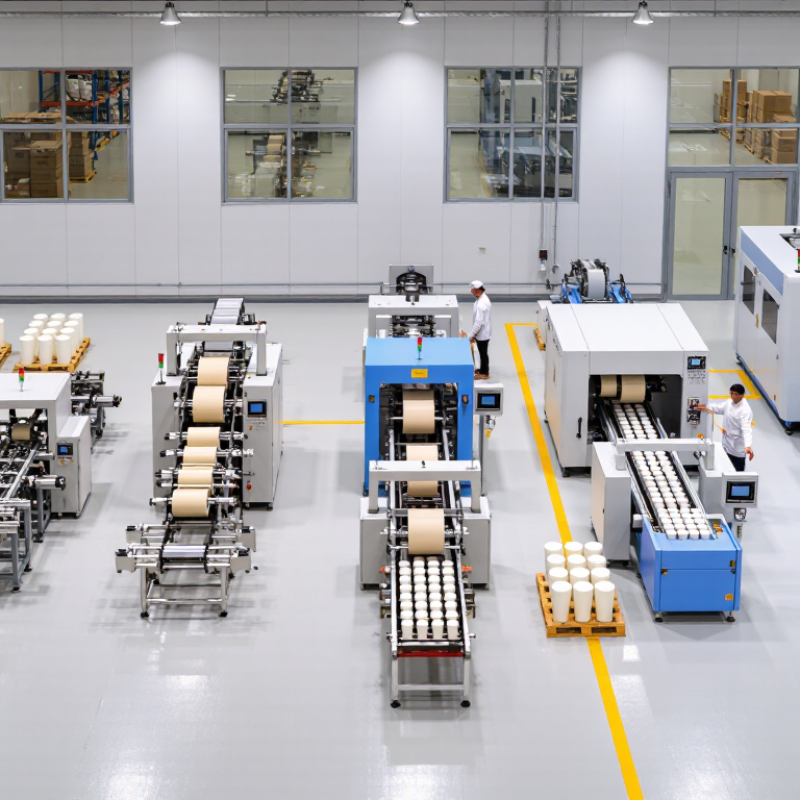
Paper cup maker machines convert printed paperboard into sealed, usable cups. A typical line unwinds coated paper from a roll. It then prints, cuts, shapes, and seals each cup. The sidewall becomes a round sleeve. A separate unit punches the bottom disc. Heat and pressure join both parts tightly. Knurling strengthens the base and helps prevent leakage.
Modern machines commonly produce 60 to 150 cups per minute, depending on cup size and material. Larger models may run faster, but speed can increase waste and seam defects. Grand View Research valued the global paper cups market at about USD 11.5 billion in 2023. Its report also forecasts steady growth through 2030. Smithers’ packaging research highlights foodservice demand and improved fiber-based packaging as important market drivers. These figures suggest opportunity, not guaranteed profit. A fast machine still needs stable paper, accurate temperature control, and trained operators.
Tips: Check the forming range before buying. A machine designed for 8-ounce cups may struggle with larger sizes. Ask for production samples using your paper grade. Inspect the rim, bottom seal, and inner coating. Moisture changes can affect feeding, so storage conditions matter. I would also measure real output over a full shift, not during a short demonstration. That test often reveals the less attractive truth: advertised speed is rarely the same as saleable production.
Choosing among the 7 best paper cup maker machines starts with production capability, not headline speed. Grand View Research estimates the global paper cups market reached about USD 12.9 billion in 2023. It also projects steady growth through 2030. That demand favors flexible equipment for different cup sizes, coatings, and order volumes.
Blank-fed forming machines suit standard single-wall cups and usually produce 60–120 cups per minute.
High-speed rotary machines can exceed 180 cups per minute under stable conditions.
Double-wall and ripple-wall machines often run more slowly, commonly around 40–90 cups per minute. They require extra forming stations and careful paper alignment. Inline printing and die-cutting reduce handling, but they can increase setup complexity. Consider floor space and operator skill.
Material compatibility matters. Machines may process PE-coated paper, water-based coated stock, or certified compostable substrates. Smithers’ “The Future of Cups and Lids to 2028” identifies fiber-based foodservice packaging as a continuing growth area. However, coating performance can vary by supplier and climate.
Ask for trial production before signing a purchase order. A machine rated at 150 cups per minute may deliver less after waste, changeovers, and quality checks. That gap is easy to underestimate.
In practical evaluation, inspect sealing lines, rim curling, reject rates, and power consumption. The fastest machine is not always the most productive one.
Global buyers need machines matched to cup size, coating, labor, and local power supply. Grand View Research estimates the global paper cups market reached about USD 11.6 billion in 2023. Its forecast shows steady growth through 2030. That growth rewards reliable production, not impressive speed alone.
Speed is not everything.
The seven strongest machine choices are high-speed automatic formers, servo-driven machines, medium-speed units, double-wall cup machines, biodegradable-coating machines, integrated printing lines, and inspection-and-packing systems.
High-speed models can produce roughly 120–250 cups per minute, depending on paper weight and cup design. Servo control improves feeding accuracy and reduces adjustment waste. Double-wall equipment suits takeaway drinks, while PLA-compatible machines support plastic-reduction goals.
Coating compatibility must be verified carefully. Some machines accept only narrow material specifications.
Smithers’ paper packaging outlook identifies foodservice packaging as a continuing growth area, supported by convenience and sustainability demand. Buyers should therefore check sealing strength, leakage rates, electrical standards, spare-part access, and operator training.
A practical factory test should run the intended paper stock for several hours. Ask for production records, not only catalogue claims. A machine that looks efficient on paper may waste more material during changeovers.
I would also compare compressed-air use and heater energy, because these costs are easy to underestimate. The “best” machine is often the one that remains stable on a difficult Monday shift. Not the fastest brochure figure.
Choosing among seven paper cup maker machines requires more than reading maximum output. Grand View Research valued the global paper cups market at USD 12.47 billion in 2023, with growth forecast through 2030. That demand makes stable production more valuable than impressive showroom speed. Compare rated output, actual output, and changeover time. A 120-cups-per-minute line may deliver fewer cups with heavy paper, tall walls, or printed blanks. Ask for a test using your paper, coating, diameter, height, and rim profile. Confirm sealing temperature, reject rate, and power consumption. Cup specifications decide whether speed is useful.
Tip: Request a 30-minute trial report. Record cups per minute, rejects, operator actions, and adjustment time. Check whether tooling changes require one technician or several. Small details become large costs.
Automation deserves equal weight. PMMI’s 2024 packaging machinery research identifies labor availability and efficiency as important investment drivers. Look for automatic paper feeding, sensor-based fault detection, servo-controlled forming, and production data logging. These features reduce variation, but they do not replace maintenance skill. Check guarding, emergency stops, lubrication access, and spare-parts support. I would distrust any brochure promising zero waste. Real factories face curled blanks, humidity changes, and occasional misfeeds. The best machine holds specifications during an ordinary, imperfect shift.
This comparison uses representative commercial machine specifications commonly found in the global market. Rated output is shown in cups per minute, while automation is scored from 1 to 5 based on feeding, forming, sealing, inspection, and packing functions. Actual performance depends on cup size, paper weight, tooling, and operating conditions.
Global buyers should compare paper cup machines by output, cup size range, automation, and service access. Seven practical categories stand out: compact entry models, high-speed lines, multi-size machines, energy-saving systems, servo-controlled machines, biodegradable-material models, and fully integrated production lines. Each option serves a different factory scale. A fast machine is not always the best machine. Power stability, operator skill, and floor space matter more than brochures suggest.
Buying internationally requires careful technical verification. Request drawings, utility requirements, spare-parts lists, and sample cups before payment. Confirm whether the machine supports your paper coating, rim design, and target cup sizes. Installation should include leveling, electrical checks, trial production, and operator training. Do not assume remote guidance is enough. A small wiring mistake can stop production for days. Compliance documents should cover food-contact materials, machine safety, electrical protection, noise limits, and destination-country requirements. Regulations vary by market. Local inspection may also require translated manuals and clear emergency controls. I would not treat a polished certificate as complete proof without checking its scope and validity.
Tips: Measure your workshop door first. Keep critical spare parts onsite. Test cups under real filling conditions. Compare total ownership costs, not only the purchase price. A cheaper machine may look efficient, yet shipping delays, installation gaps, and unstable quality can erase the savings. Recheck your assumptions before ordering.
Standard forming machines usually produce 60–120 cups per minute. High-speed models may exceed 180 cups per minute. Speed is not everything.
Double-wall and ripple-wall machines often produce 40–90 cups per minute. They need extra forming stations and accurate paper alignment. Setup may take longer.
Some machines support multiple cup sizes, but format changes require adjustments. Check mold availability, changeover time, and waste levels. Ask for a live demonstration.
Machines may process PE-coated, water-based coated, or certified compostable paper. Compatibility depends on coating thickness and paper stiffness. Test your intended material.
Run the machine with your actual paper stock for several hours. Measure good cups, rejects, changeover waste, and energy use. Catalogue figures can disappoint.
Inspect sealing lines, rim curling, leakage, and cup shape. Check rejects at regular intervals. A strong-looking cup may still leak later.
Integrated systems reduce manual handling and floor movement. However, they can increase setup complexity and operator training needs. Compact layouts help.
Compare electricity, heater energy, compressed-air use, spare parts, and maintenance access. Confirm local electrical compatibility. I might underestimate training costs without factory records.
Request trial production, inspection records, service details, and operator training plans. Test the machine under difficult conditions. A stable Monday shift matters more than a perfect brochure.
A Paper Cup Maker Machine is an automated production system designed to transform coated paper into finished cups through forming, sealing, heating, shaping, and quality-control stages. This article explains how these machines work and introduces the main equipment types, from compact entry-level models to high-speed fully automatic systems. It compares their production capabilities, suitable cup sizes, operating stability, and flexibility for different business requirements.
The guide presents seven practical machine options for global buyers, focusing on speed, automation level, energy use, maintenance needs, and cup specifications rather than brand names. It also outlines how to evaluate machine performance, select suitable supporting equipment, and plan for installation, operator training, spare parts, and after-sales service. In addition, readers will learn about export documentation, electrical compatibility, packaging, workplace safety, and relevant quality and compliance considerations, helping them make a reliable purchasing decision for efficient and sustainable paper cup production.

Huan Qiang