Choosing the best Small Paper Cup Machine from China is not simply a price comparison. It is a production decision involving speed, stability, energy use, service, and long-term maintenance.
A suitable machine should form cups evenly, maintain accurate side sealing, and reject defective products without slowing the line. Buyers should examine output under realistic conditions, such as 8-ounce cups, 190-gsm paper, and continuous shifts. Factory videos can help, but live testing reveals more. Ask to inspect the ultrasonic system, heating components, control cabinet, and spare-parts list. Small details matter.
Li Wei, a China-based paper cup machinery consultant, offers a practical warning: “A cheap machine becomes expensive when production stops.”
That point deserves attention. Some suppliers advertise maximum speed, yet actual output may fall when paper quality changes. This is where many buyers misjudge the machine. A reliable manufacturer should explain speed limits honestly and provide test records, installation guidance, operator training, and responsive technical support.
The best Small Paper Cup Machine may not be the fastest option. It may be the one that runs steadily during an ordinary working day. Look beyond polished brochures. Compare motor quality, forming accuracy, electrical components, warranty terms, and service response times. Also consider local voltage requirements and available floor space.
No machine is perfect. Even a well-built model needs cleaning, lubrication, and careful adjustment. That is often overlooked. A thoughtful purchase balances budget with dependable production, rather than chasing an impressive number on a specification sheet.
What Is a Small Paper Cup Machine?
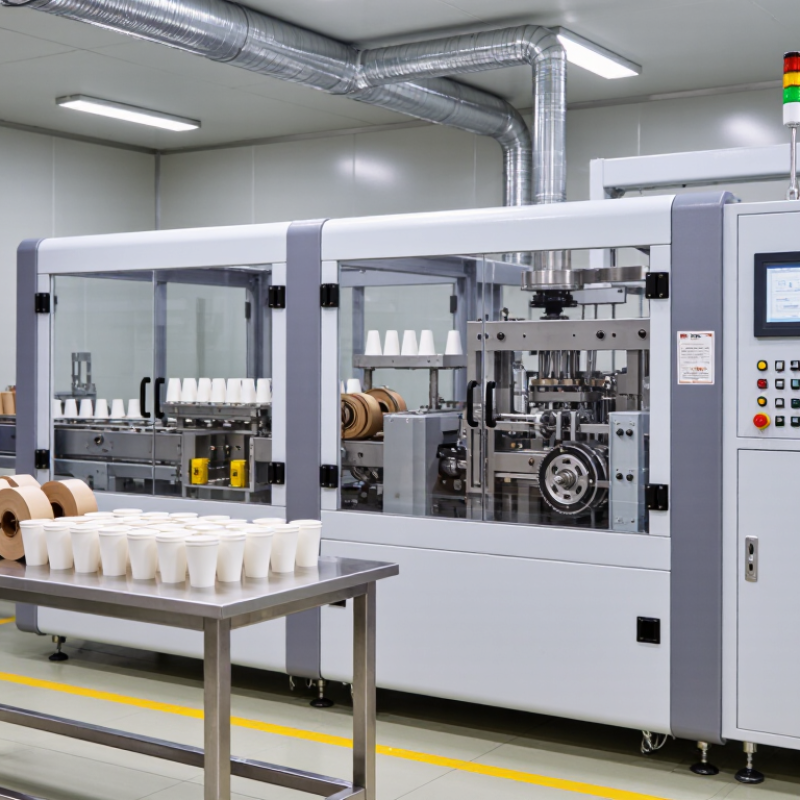
A small paper cup machine is a compact production system that turns prepared paper blanks into finished cups. It usually feeds a printed sidewall blank, shapes it into a cylinder, and joins the seam with heat or ultrasonic sealing. A separate paper bottom is cut, inserted, and sealed. The rim is then curled for a smoother drinking edge. Finished cups are counted and stacked. That is the basic cycle.
“Small” often describes the machine’s footprint or output capacity, not the cup itself. Some models suit workshops or businesses testing local demand; others need more space for feeding, stacking, and material storage. Operators should check the supported cup sizes, paper weight, changeover time, power needs, and actual production rate. Advertised speed may not reflect steady output after adjustments or stoppages.
Reliable results depend on more than the machine. Paper coating, blank accuracy, temperature, and pressure can all affect seam strength and leakage. A practical evaluation includes running the intended paper and cup size, then checking sample cups for loose seams, uneven rims, and leaks. Still, “small” can be misleading. A compact machine may require careful setup and regular cleaning, and a trial run can expose details a specification sheet misses.
A small paper cup machine is a compact production system for forming paper blanks into disposable cups. The comparison below outlines common machine configurations; actual capacity and compatibility depend on the model, cup design, paper stock, and operating conditions.
| Comparison Point | Entry-Level Semi-Automatic | Compact Automatic | Small High-Speed Automatic |
|---|---|---|---|
| Typical output range | Approximately 30–50 cups per minute | Approximately 50–100 cups per minute | Approximately 100–150 cups per minute |
| Typical cup capacity | Often configured for a limited range, such as 4–12 oz | Commonly configured for sizes within roughly 2–16 oz | May cover multiple sizes, often within roughly 2–16 oz, subject to tooling |
| Automation level | More manual handling and operator attention during production | Automated forming and cup collection, with routine operator checks | Automated forming and collection, usually with monitoring and fault alerts |
| Best suited to | Start-ups, trial production, or modest order volumes | Small and medium businesses seeking a balance of output and footprint | Businesses with steady demand and a need for greater production capacity |
| Floor-space considerations | Generally the simplest option to fit into a small production area | Requires space for the machine, operator access, and finished-cup handling | May need additional room for feeding, collection, and downstream packing |
| Paper and coating | Machine compatibility varies. Confirm the supported paper weight, cup-wall structure, and coating type; paper cups commonly use PE-coated or other heat-sealable paperboard. | ||
| What to verify before purchase | Request a live production test using your cup design and paper stock. Confirm actual output, changeover time, tooling requirements, electrical supply, installation needs, spare parts, training, and after-sales support. | ||
| Practical selection guide | Consider this type when a lower initial production capacity is acceptable and manual involvement is manageable. | Often the most balanced choice for a small operation that needs dependable output without moving to a larger production line. | Consider this type when projected demand justifies the higher capacity and the facility can support the required workflow. |
Note: Output figures are indicative ranges for common machine categories, not guaranteed specifications. The best machine depends on required cup sizes, target daily output, available floor space, budget, and local service support. Confirm all specifications with the equipment supplier before ordering.
Match it to your cup sizes, daily output, paper stock, and available floor space. A fast machine may not fit your actual production plan.
Estimate realistic shifts, setup time, and size changeovers. Leave room for a learning curve. I may still underestimate setup time.
Request a live trial with your intended paper and cup design. Inspect the rim, side seam, bottom seal, and cup height across a batch.
Ask for written details on power, air pressure, tooling range, paper weights, coatings, and expected speed. Small details matter.
Check the floor, power supply, compressed air needs, and ventilation. Measure doorways and service clearance before delivery.
Start slowly and inspect cup roundness, seal strength, and consistent height. One clean trial is not enough.
Clean paper dust from forming areas each shift. Follow the lubrication and inspection schedule, and log stoppages and replaced parts.
Confirm operator training, spare-part availability, and service response times in writing. Keep photos of settings and first-run samples. It helps later.
A Small Paper Cup Machine is designed to turn paper blanks into finished cups through a series of forming, sealing, shaping, and rim-curling steps. Compact models can suit startups and businesses with limited floor space, while still offering useful production capacity. When comparing machines, consider output speed, cup-size range, paper compatibility, sealing method, automation level, energy use, and ease of operation. These factors affect both product quality and the machine’s suitability for your planned workload.
The best choice depends on your production volume, available workspace, budget, and the types of cups you intend to make. Before buying, confirm the machine’s specifications, included components, installation requirements, operator training, and access to replacement parts or technical support. Plan for regular cleaning, inspection, and maintenance to help reduce downtime and keep production consistent. A careful evaluation of equipment and ongoing needs can help you select a practical machine for your business.

 Huan Qiang