Choosing the China Best Paper Cup Machine Parts Supplier requires more than comparing prices. It requires evidence, process knowledge, and practical verification. A supplier may display polished product photos, yet the real test appears beside the machine. Does the sealing ring fit tightly? Does the gear maintain stable rotation after thousands of cycles? Can the supplier replace a damaged heater quickly?
As packaging equipment consultant David Zhang says, “A reliable paper cup starts with a reliable machine part.” This simple observation reflects a wider industry truth. Paper Cup Machine Parts influence forming accuracy, heat control, production speed, and maintenance costs. Small components can create large losses when they fail during continuous production.
Experienced buyers should inspect material grades, dimensional tolerances, machining quality, and compatibility with specific cup machine models. Ask for drawings, inspection records, sample parts, and clear after-sales procedures. A trustworthy supplier should explain limitations honestly. Perfect claims deserve careful questions. Even a well-made part may require adjustment because machines differ in age, design, and operating conditions.
China offers a broad manufacturing base, but quality varies between factories. Some suppliers produce standard components efficiently. Others provide engineering support for customized parts. The best choice depends on your machine, output target, budget, and replacement schedule. This guide examines the practical signals behind dependable sourcing. It also considers an uncomfortable point: the cheapest part may become the most expensive decision. Reliability is not proven by promises. It is demonstrated through fit, performance, documentation, and consistent support.
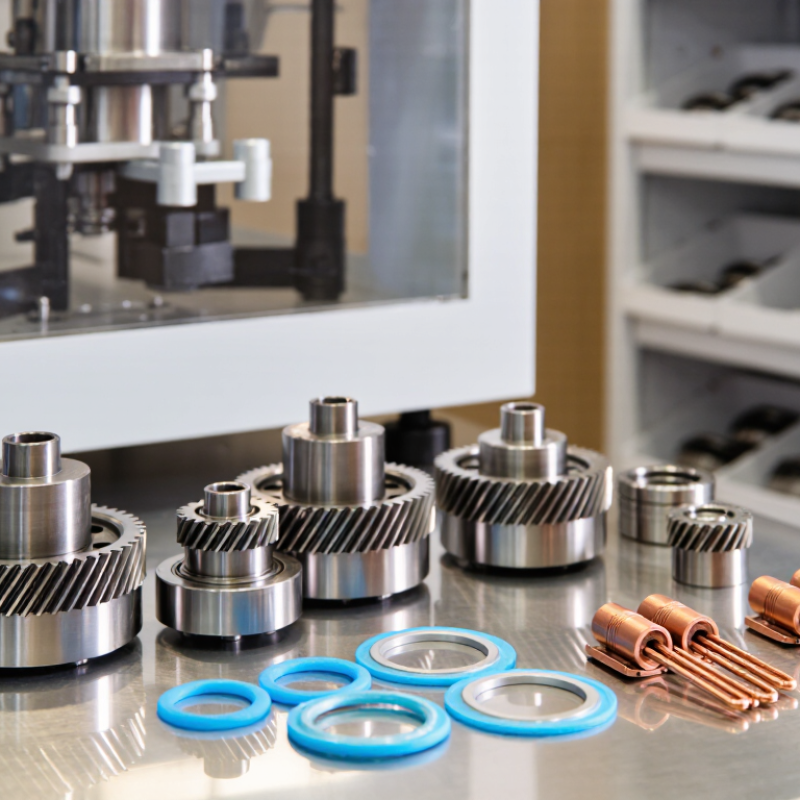
A reliable supplier understands how small parts affect production speed, sealing quality, and machine stability. Their engineers should read technical drawings, check tolerances, and suggest suitable materials for heat and pressure. Ask for inspection records, material certificates, and clear production schedules. These documents show practical control, not just attractive promises. During my equipment sourcing experience, sample testing often revealed problems hidden in product photos. A part may look precise but fail after repeated heating.
Tips: Request one sample before placing a large order. Test its fit, surface finish, hardness, and operating life. Confirm the supplier can reproduce the same dimensions later. Keep written records of drawings and approved samples. Small details prevent costly delays.
Reliable communication matters, especially when a replacement part is urgently needed. The supplier should answer technical questions directly and explain possible limitations. They should also provide packaging that protects threads, edges, and polished surfaces during transport. No supplier is perfect. I have seen capable factories miss delivery dates because their inspection process depended on one person. That weakness deserves honest discussion. A stronger supplier uses documented quality checks, backup staff, and traceable order updates. They welcome reasonable audits and accept responsibility when a part needs correction.
Which Paper Cup Machine Parts Do Chinese Suppliers Commonly Provide?
Chinese suppliers commonly provide forming molds, knurling wheels, heating elements, and sealing components for paper cup machines. These parts shape the cup, bond the sidewall, and form a stable bottom seal. Many suppliers also produce gears, cam followers, bearings, shafts, and guide rollers. These mechanical parts must match the machine’s original dimensions closely.
Electrical components are also widely available. Common items include temperature controllers, proximity sensors, photoelectric sensors, solenoid valves, and control switches. Some suppliers can supply PLC modules and wiring assemblies, but compatibility requires careful checking. A small difference in voltage or connector design can stop an entire production line. Technical drawings, sample measurements, and clear part numbers reduce this risk.
Reliable suppliers usually confirm material grades, hardness, surface treatment, and machining tolerance before production. For example, stainless steel may suit wet areas, while hardened steel works better for cutting or forming tools. Ask for inspection records and trial samples. I have seen buyers focus on price and overlook shaft alignment, which later causes uneven cups and abnormal noise. That mistake is easy to make. It deserves more attention. Suppliers may also provide customized parts, but a perfect drawing does not always guarantee perfect machine performance. Test fitting and short production trials remain necessary.
China Best Paper Cup Machine Parts Supplier?
Choosing a paper cup machine parts supplier requires more than comparing prices. Compatibility comes first. Check shaft diameter, mounting holes, gear pitch, sensor position, and operating speed against your machine drawings. A part can look identical yet fail after several production hours. Fit matters. Ask for evidence.
Quality should be measured, not promised. Request material certificates, dimensional inspection records, hardness results, and batch traceability. For forming tools, confirm surface finish and tolerance control, especially around sealing and folding areas. According to a 2024 Grand View Research assessment, the global paper cups market continues expanding, increasing pressure on factories to reduce downtime and maintain consistent output. That makes repeatable parts more valuable than occasional low prices.
Manufacturing standards also deserve careful review. Suppliers should operate a documented quality system, preferably aligned with ISO 9001, while food-contact components need applicable local compliance documents. Smithers’ packaging industry analysis highlights stronger demand for recyclable and fiber-based packaging, but sustainability claims do not replace engineering proof. I have seen buyers accept a certificate without checking its scope. That is a costly mistake. Test one sample under real heat, pressure, and speed before ordering a full batch. Paper remembers small alignment errors. A supplier with calibrated equipment, inspection photos, and clear corrective-action records is easier to trust, even when its quotation is not the cheapest.
A low quote is not always a low operating cost. Compare the complete price: part cost, tooling, inspection, packaging, freight, and replacement risk. PMMI’s 2024 packaging machinery outlook estimated the North American market at about US$11.3 billion in 2023. This scale shows why small delays can create serious production losses. Request itemized quotations for heaters, gears, sensors, molds, and electrical components. Check material grades, tolerances, test records, and warranty terms.
Lead time needs evidence. Ask for stock status, production days, inspection time, and shipping options. A supplier promising five days may exclude testing or export handling. Custom parts require drawings, samples, and revision control. ISO 9001 certification can support process discipline, but it does not guarantee every part will fit your machine. Review dimensional reports and approve a sample before repeating an order. My practical mistake was comparing delivery promises without checking the supplier’s response time after payment. Support matters more during a breakdown.
Tips: Build a comparison sheet with six columns: price, lead time, tolerance, customization, warranty, and technical support. Score each supplier against the same part number. Ask for a video of the inspection process. Keep one approved sample in your workshop. Also verify compatibility with your machine’s voltage, controller, and mounting pattern. Smithers’ paper packaging market research identifies efficiency and material performance as continuing industry priorities. Therefore, a cheaper component that causes uneven sealing may cost more than a premium-tested part. Forecasts are useful, but they are not guarantees. Evaluate recent evidence.
China Best Paper Cup Machine Parts Supplier?
Selecting the best supplier starts with your production requirements, not a polished sales message. Record your machine model, part dimensions, material grade, operating speed, and expected output. A reliable supplier should review these details before suggesting replacements. Ask for technical drawings, tolerance data, inspection records, and sample approval procedures. Clear documentation shows practical engineering knowledge.
Communication matters during real production. Check response times, packaging methods, spare-part availability, and after-sales support. The supplier should explain how each component affects forming accuracy, sealing quality, and machine downtime. Request evidence of quality control, such as material certificates and dimensional inspection reports. Do not rely only on a low quotation. An inexpensive part can create repeated adjustments and wasted paper.
Tips: Compare at least three suppliers using the same technical checklist. Confirm compatibility before placing a full order. Ask whether replacement parts remain available after several months. Test a small batch first. Keep written records of every specification and revision. No supplier is perfect. Even experienced buyers can miss a tiny tolerance issue. That mistake may become visible only after hours of continuous production. A careful supplier will discuss possible weaknesses instead of promising flawless results.
| Selection Dimension | Practical Benchmark for Paper Cup Production | Documents or Checks to Request | Suggested Weight | Priority |
|---|---|---|---|---|
| Part Compatibility | The part should match the machine model, assembly position, dimensions, material, and operating specifications. Critical interfaces should be confirmed before ordering. | Provide the machine model, part number, technical drawing, photographs, dimensions, and a sample part when available. Request a written compatibility confirmation. | 20% | Critical |
| Material and Manufacturing Quality | Materials should be selected according to the component function, such as stainless steel for corrosion resistance, hardened steel for wear surfaces, and food-contact-compatible materials where applicable. | Request material certificates, heat-treatment details, surface-finish information, dimensional inspection records, and applicable food-contact declarations. | 15% | Critical |
| Dimensional Accuracy | Tolerances should be stated on the drawing rather than described only as “high precision.” Fit-critical parts require documented measurement against the approved drawing. | Check inspection reports, calibration status of measuring equipment, tolerance tables, and first-article inspection results before approving repeat orders. | 15% | Critical |
| Wear Life and Reliability | Expected service life depends on machine speed, paper-board thickness, operating conditions, lubrication, and maintenance. A reliable supplier should provide a test method or historical service data. | Ask for wear-test results, recommended replacement intervals, failure analysis support, and references for comparable applications without relying only on marketing claims. | 15% | Critical |
| Quality Control System | A documented process should cover incoming materials, machining, heat treatment, surface finishing, final inspection, packing, and traceability. | Review quality certificates, process-control records, nonconformance procedures, batch identification, and the supplier’s inspection plan. | 10% | High |
| Lead Time and Production Capacity | Lead time should be quoted separately for sample approval, standard repeat orders, and urgent replacements. Capacity should be evaluated against your forecasted demand. | Request a written production schedule, monthly capacity information, raw-material availability, holiday planning, and a clear process for expediting critical parts. | 10% | High |
| Technical Support | Support should include drawing review, installation guidance, troubleshooting, replacement identification, and communication during nonconformity resolution. | Evaluate response time, engineering capability, language coverage, availability of assembly instructions, and escalation procedures for production-stopping issues. | 8% | High |
| Packaging and Shipping Protection | Parts should be protected from impact, moisture, corrosion, contamination, and mix-ups during international transport. | Confirm corrosion protection, individual labeling, shock-resistant packaging, packing lists, export documentation, and inspection photos before shipment. | 3% | Medium |
| Commercial Terms and Total Cost | Compare total landed cost rather than unit price alone, including tooling, samples, inspection, packaging, freight, duties, payment terms, and possible downtime. | Request an itemized quotation, validity period, minimum order quantity, sample charges, warranty terms, replacement policy, and responsibilities for defective parts. | 4% | Medium |
A reliable supplier understands how small parts affect speed, sealing, and machine stability. They should read technical drawings and check critical tolerances. Promises are not enough. Request inspection records, material certificates, and production schedules.
Share the machine model, part dimensions, material grade, operating speed, and expected output. These details help prevent unsuitable replacements. Missing one measurement can cause trouble. The supplier should review your information before recommending parts.
A sample can reveal problems hidden in product photos. Check its fit, surface finish, hardness, and operating life. Test it under realistic heat and pressure. A polished appearance proves very little.
Ask whether the supplier can reproduce approved dimensions later. Keep written drawings, revisions, and sample approvals. Compare future parts with the original sample. Small records matter.
Request material certificates, dimensional inspection reports, and documented quality checks. These records show how production is controlled. They also support clearer discussions when corrections are needed. Do not depend only on a low quotation.
Communication becomes critical when a replacement part is urgently needed. The supplier should answer technical questions directly and explain limitations. Check response times and order updates. Silence creates avoidable downtime.
Packaging should protect threads, sharp edges, and polished surfaces. Weak protection can damage an accurate part before installation. Ask for photos of the packing method. Transport damage is easy to overlook.
Compare at least three suppliers using the same technical checklist. Review compatibility, inspection methods, delivery timing, and after-sales support. Test a small batch before ordering more. Even careful buyers miss tiny tolerance issues.
Finding the right Paper Cup Machine Parts supplier in China requires more than comparing prices. A reliable supplier should offer consistent product quality, accurate dimensions, stable material performance, and clear manufacturing standards. Common parts may include forming components, heating elements, electrical controls, cutting tools, sealing assemblies, bearings, and other replacement items used in paper cup production. Compatibility with the machine model and production requirements is essential, so technical drawings, specifications, and quality inspection records should be reviewed before placing an order.
Buyers should also compare lead times, minimum order quantities, customization capabilities, packaging, warranty terms, and after-sales support. A dependable supplier communicates clearly, responds efficiently, and can provide practical assistance with installation or replacement questions. The best choice is not always the lowest-cost option; it is the supplier that offers a balanced combination of quality, compatibility, delivery reliability, customization, technical support, and long-term cooperation potential for your paper cup production needs.

Huan Qiang