White Paper Deep-Dive
The Engineering & Anatomy of Ripple Wall Forming Machines
Understanding the mechanical complexity, material handling dynamics, and system integration required for flawless double-wall insulation packaging.
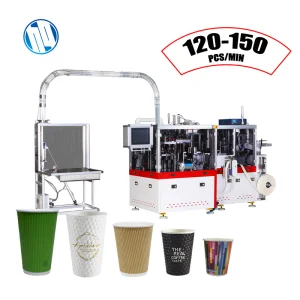
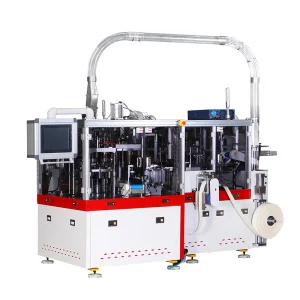
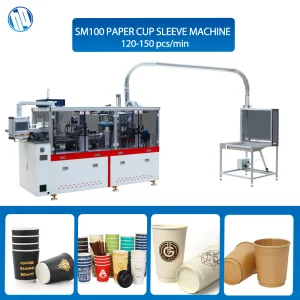
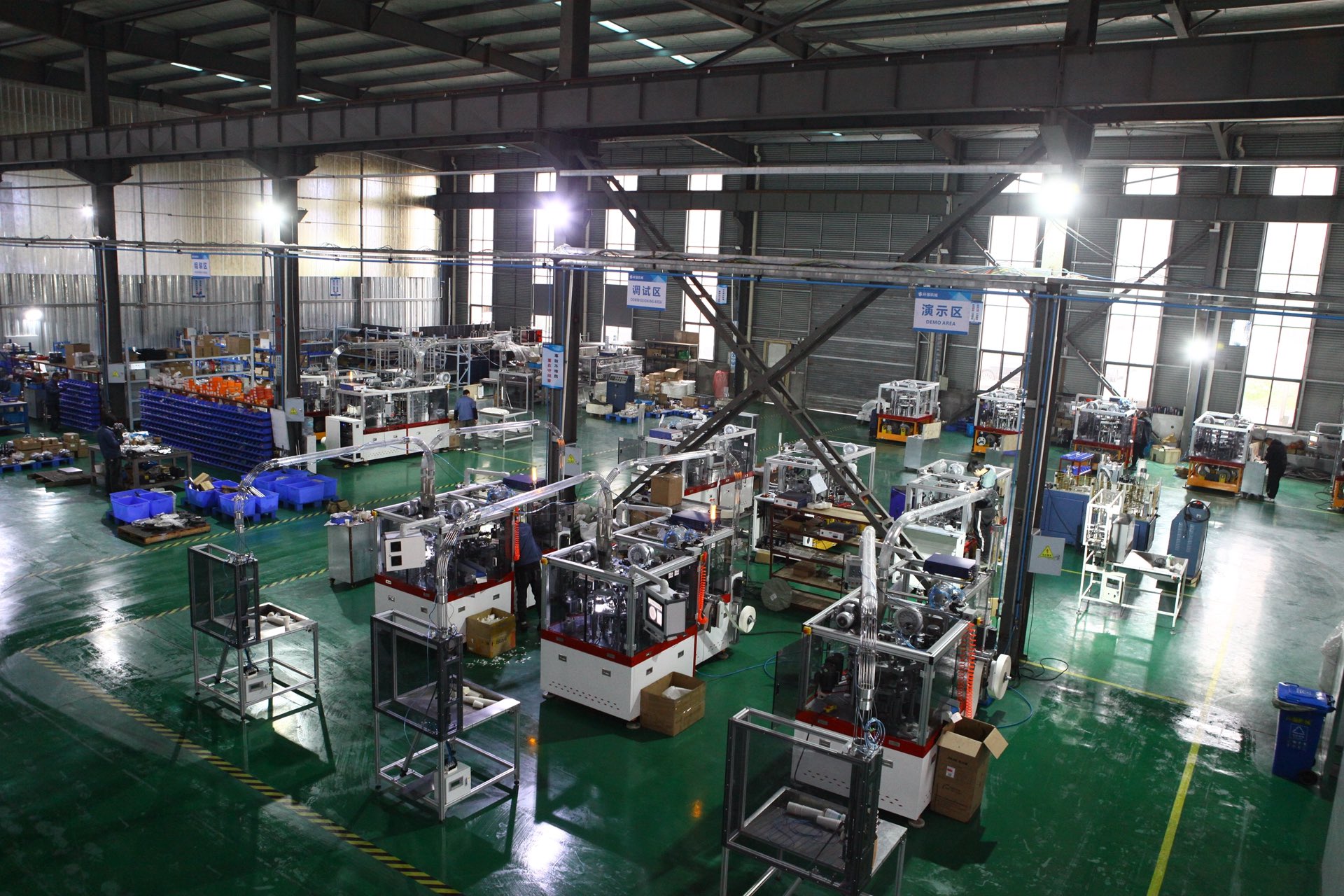
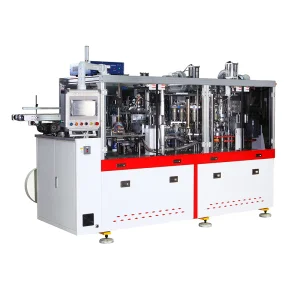
Ripple Wall Cups (Double-Wall Insulated Cups) represent the pinnacle of modern thermal packaging. They utilize a two-layer structure: an inner cup that holds the liquid and an outer paper sleeve that features a corrugated (ripple) texture. The air trapped between these layers acts as a natural thermal insulator, keeping the hot beverage warm while protecting the consumer's hands. Achieving this structure at high speeds requires specialized precision machinery: the Ripple Wall Cup Sleeve Machine (SM100 Series).
The manufacturing process consists of three highly synchronized phases:
1. Sleeve Feeding & Shaping
The outer sleeve blank is extracted from the magazine via suction cups, wrapped around a cone-like mandrel, and sealed. Depending on client configurations, sealing is achieved using high-strength cold adhesives or eco-friendly ultrasonic hot-melt welding.
2. Glue Dispensing & Positioning
Precisely controlled glue nozzles apply hot-melt adhesive in calculated paths along the inner surface of the sleeve. Optical sensors verify that the adhesive layout is uniform to prevent cup slippage or glue bleed.
3. Interlocking & Compression
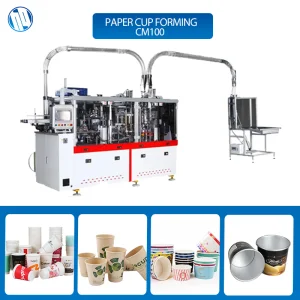
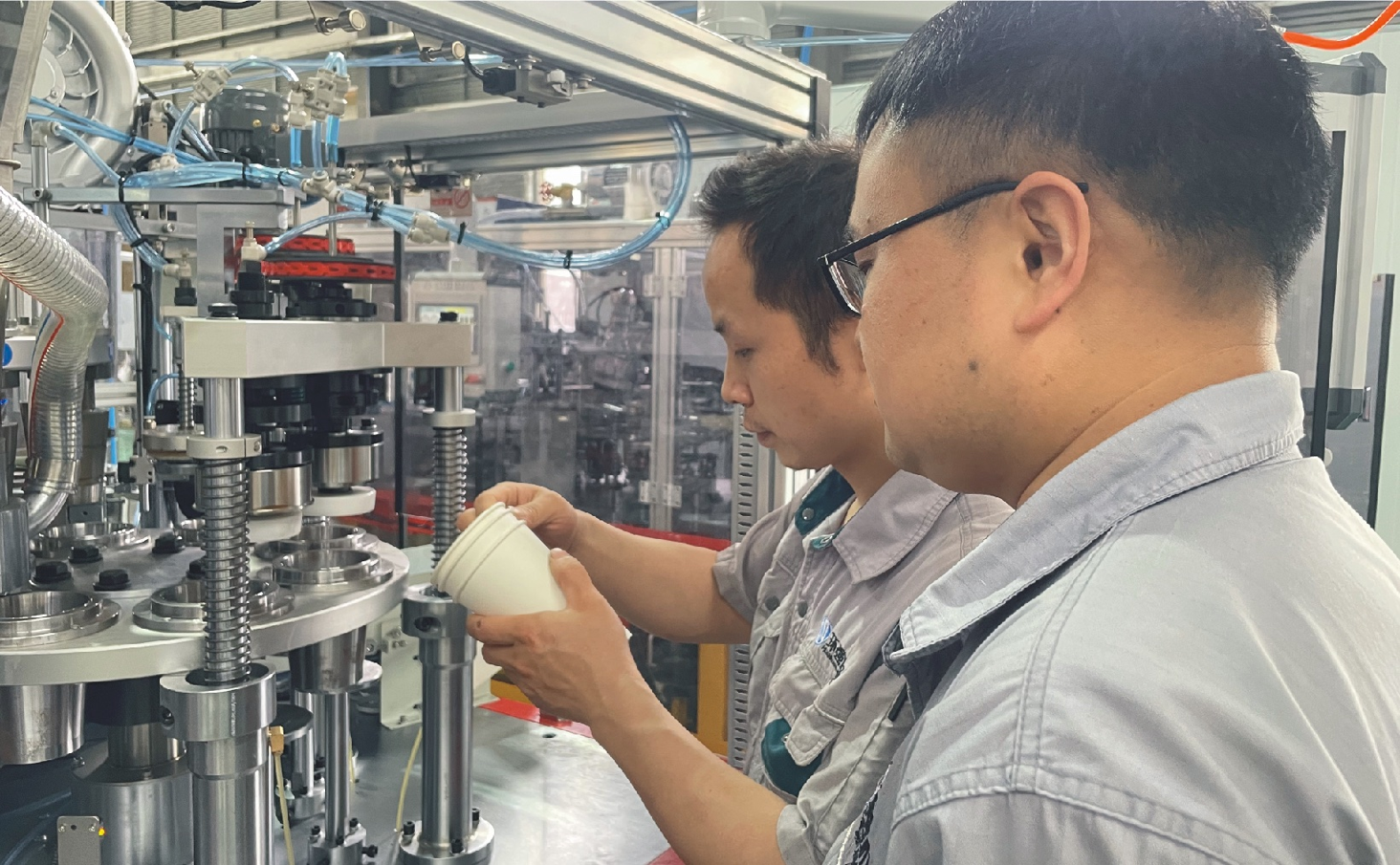
The fully formed inner cup (produced from machines like the CM100) is automatically inserted into the adhesive-coated outer sleeve. An indexing compression turret applies precise mechanical pressure to bond the layers without crushing the delicate corrugated ridges.
 Huan Qiang