Engineered for absolute reliability, precision mechanics, and structural consistency under continuous industrial workloads.
Analyzing the global dynamics driving the food packaging industry towards sustainable materials and high-efficiency smart machinery.
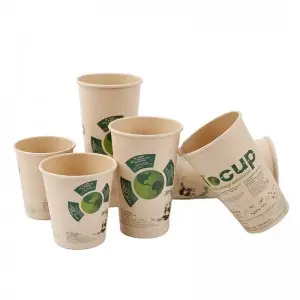
The global food packaging sector is undergoing a profound structural shift. Driven by rigorous international environmental laws—such as the European Union's Single-Use Plastics Directive (SUPD) and comparable state-level bans across North America—food service chains and packaging suppliers are rapidly phasing out standard polyethylene (PE) lined cups. The industry is transitionally adopting sustainable substrates: PLA (Polylactic Acid), PBS (Polybutylene Succinate), and advanced water-based aqueous barrier coatings. This shift presents complex processing challenges.
Aqueous barrier coatings and bioplastics exhibit significantly narrower thermal sealing windows than traditional PE. Standard, low-tech cup-making machines often struggle to process these eco-friendly coatings, leading to blistered seals, cup leakage, and excessive scrap rates. For high-volume producers, adapting to these substrates requires equipment that provides exact, multi-stage temperature control, ultra-precise mechanical timings, and modern ultrasonic sealing technology.
Simultaneously, rising raw material costs and global labor shortages are compelling manufacturers to adopt complete automated production ecosystems. Beyond standalone cup formers, commercial operators now require fully integrated production lines—incorporating synchronized paper roll blanking, multi-station main forming, high-precision double-wall outer sleeving, online visual inspection systems, and automated packaging arrays. This holistic approach ensures optimized Overall Equipment Effectiveness (OEE) and long-term compliance in a highly competitive market.
Detailing our long history, in-house manufacturing capabilities, and relentless focus on quality and innovation.
Huanqiang Machinery (HQ Machinery) has operated at the forefront of China's paper container machinery sector for over 27 years. Since our founding, we have focused on a primary engineering objective: improving the production speed, mechanical stability, and operational safety of paper cup and container forming equipment.
Our transition from a regional equipment supplier to a global machinery manufacturer is built on our deep investment in vertical integration. While many assembly operations outsource component production, HQ Machinery maintains its own dedicated, state-of-the-art CNC tooling and processing center. This facility produces the vast majority of our machine frames, indexing cams, and curling moulds in-house, ensuring mechanical tolerances within 0.01mm. This strict quality control prevents operational deviations during high-speed, continuous 24/7 manufacturing cycles.
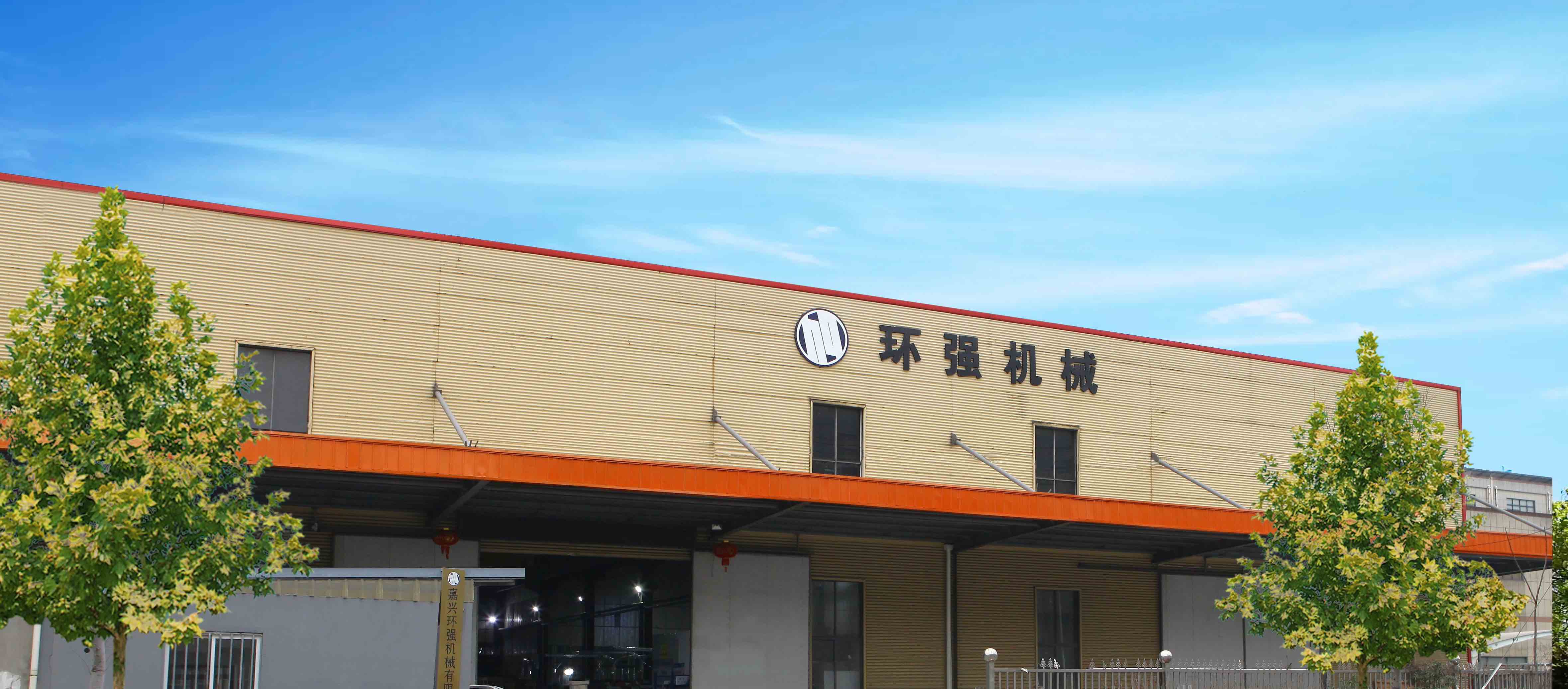
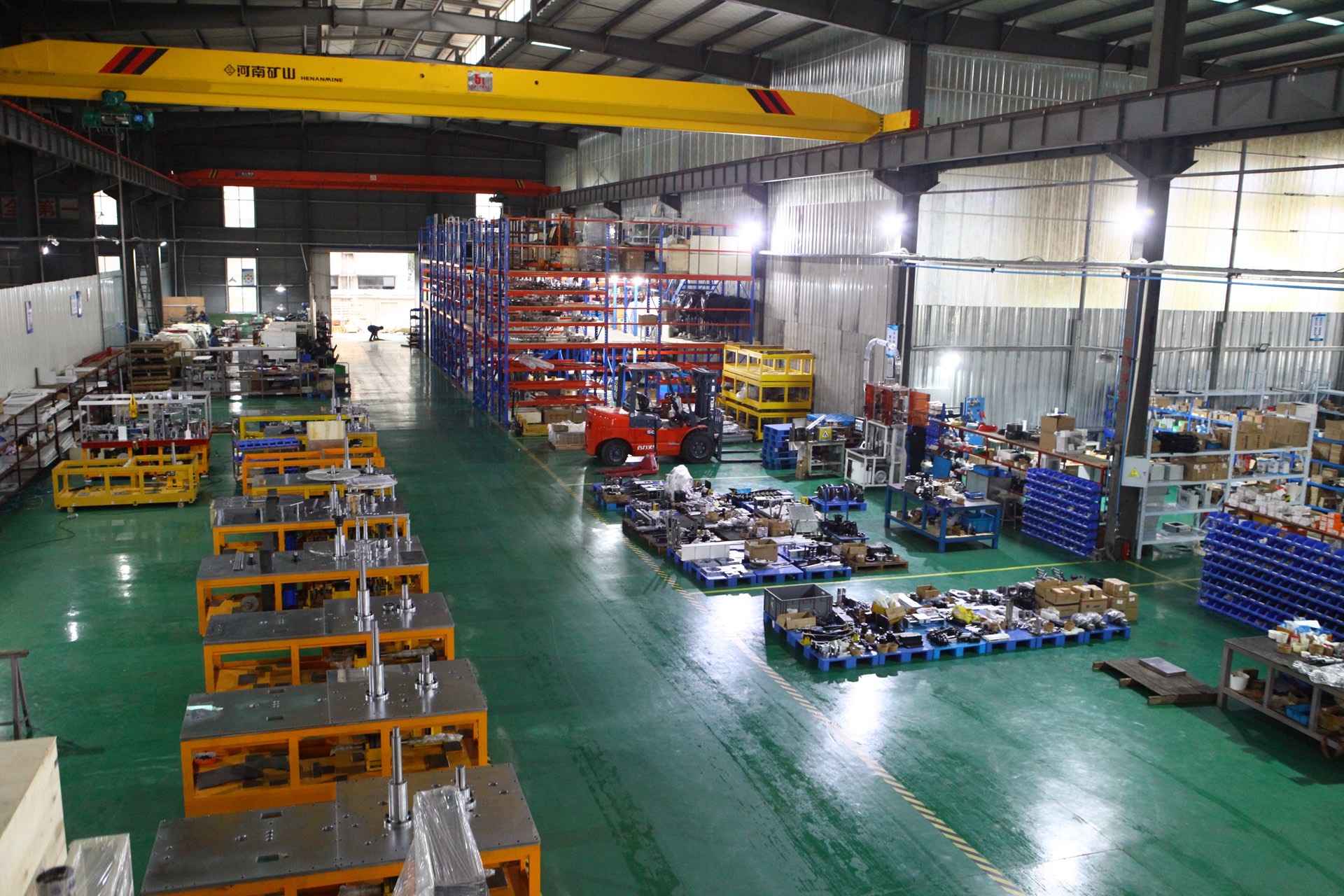
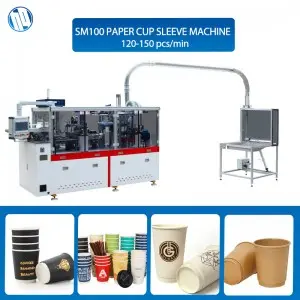
Today, our product range includes advanced high-speed paper cup machines, dual-wall sleeve machines, high-capacity paper bowl formers, non-round takeaway container systems, and intelligent visual inspection platforms. HQ Machinery delivers more than standalone hardware; we build high-capacity production lines that give global packaging companies a sustainable market advantage.
Our engineering strengths are divided into four primary departments, each focused on maximizing reliability and machine OEE.
Led by senior mechanical engineers with decades of combined packaging machinery experience, our design team maintains an independent R&D center. Our development investments consistently exceed industry averages, driving innovations in multi-servo synchronization, integrated ultrasonic sealing, digital monitoring, and cloud-based diagnostics that make system upgrades simple and straightforward.
Our strict quality protocols trace materials and assembly across more than 200 checkpoints. Our workshops feature imported German five-axis CNC machining centers, and every machine undergoes continuous, simulated production speed fatigue testing before shipment to guarantee immediate operation on the factory floor.
We manage sheet metal fabrication, structural welding, precision grinding, and system assembly entirely within our own facilities. Eliminating intermediate processing steps reduces manufacturing lead times and costs, allowing us to implement design changes and deliver custom orders quickly.
Our service infrastructure operates on a 24/7 technical response system. Using secure, remote industrial modems integrated into our PLC systems, our engineers can perform diagnostics, update parameters, and resolve up to 90% of software issues without requiring on-site travel.
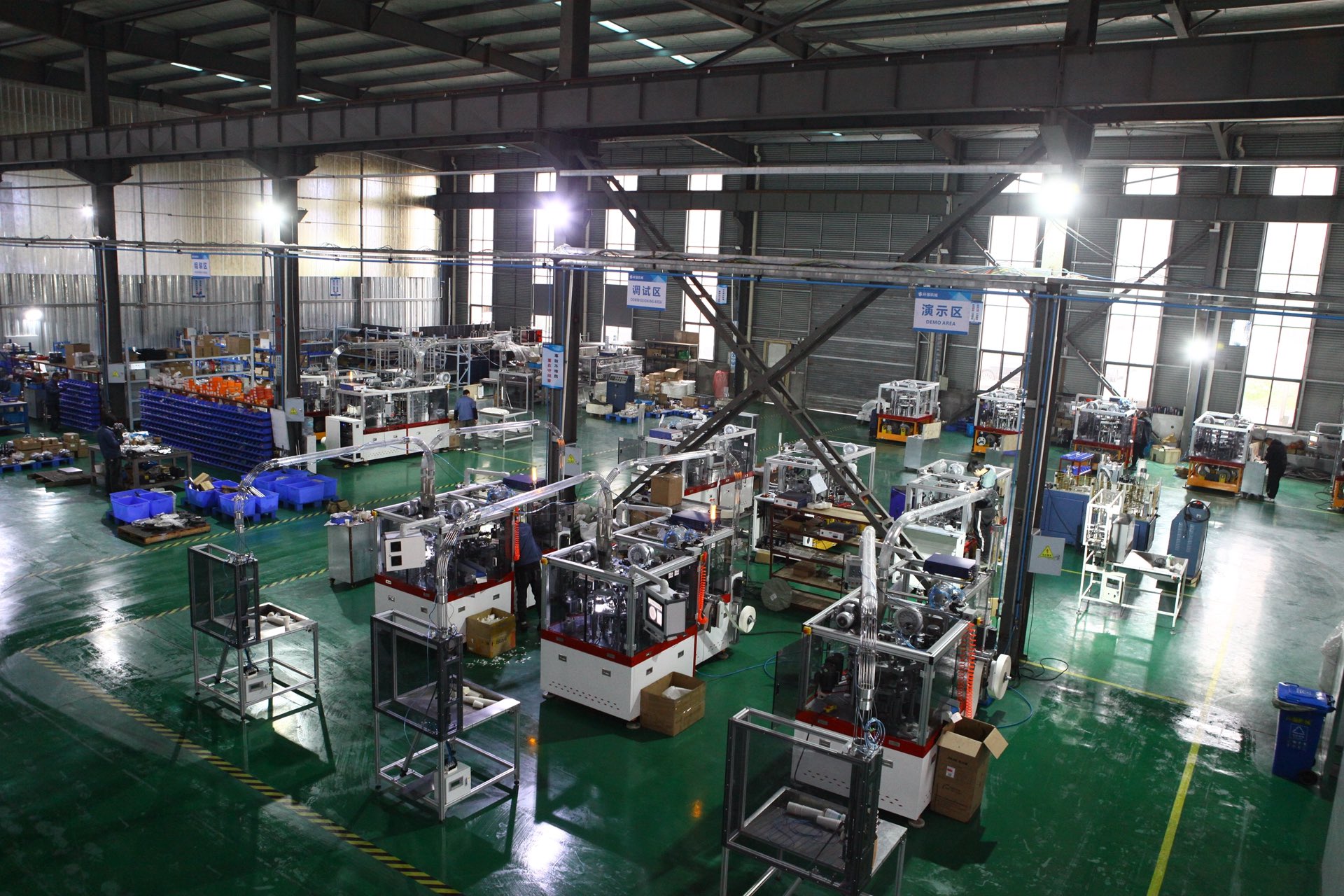
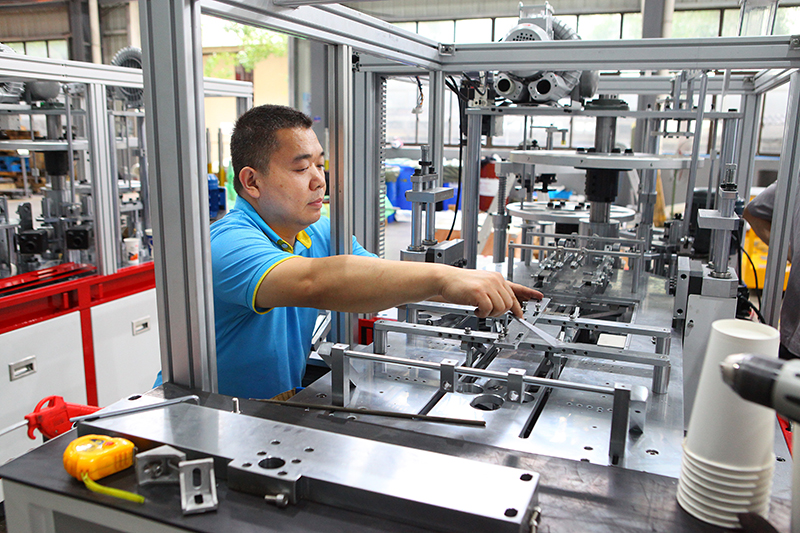
Exploring the mechanical, electrical, and structural systems that define HQ Machinery's high-speed forming technology.
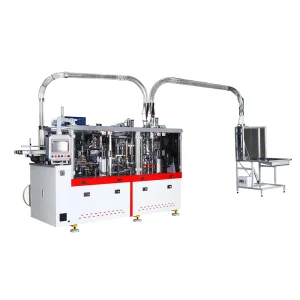
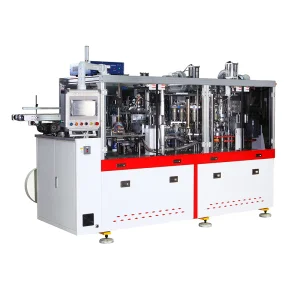
HQ Machinery's high-speed forming platforms are built on a solid, stress-relieved steel frame. This design absorbs the high frequency vibrations generated during high-speed, continuous paper forming operations. Key technical systems include:
Unlike low-cost chain-driven systems that can stretch and cause registration errors over time, our main mechanical drivetrain utilizes hardened cylindrical indexing cams connected directly to heavy duty helical gearboxes. This rigid mechanical connection maintains precise timing between the paper feeding, cup wall sealing, bottom blanking, and rim curling stations.
To reduce wear on mechanical linkages during continuous operation, the entire indexing drivetrain runs inside an enclosed, filtered oil-bath. Continuous pressure lubrication delivers oil directly to all primary bearings, slides, and cams, keeping running temperatures stable, reducing maintenance requirements, and extending the operational lifespan of the core mechanics.
Bottom blank feeding is controlled by high-torque, synchronized servo motors. This digital feeding system matches the bottom paper feed rate directly to the cup forming speed, minimizing scrap and saving raw materials compared to traditional mechanical linkages.
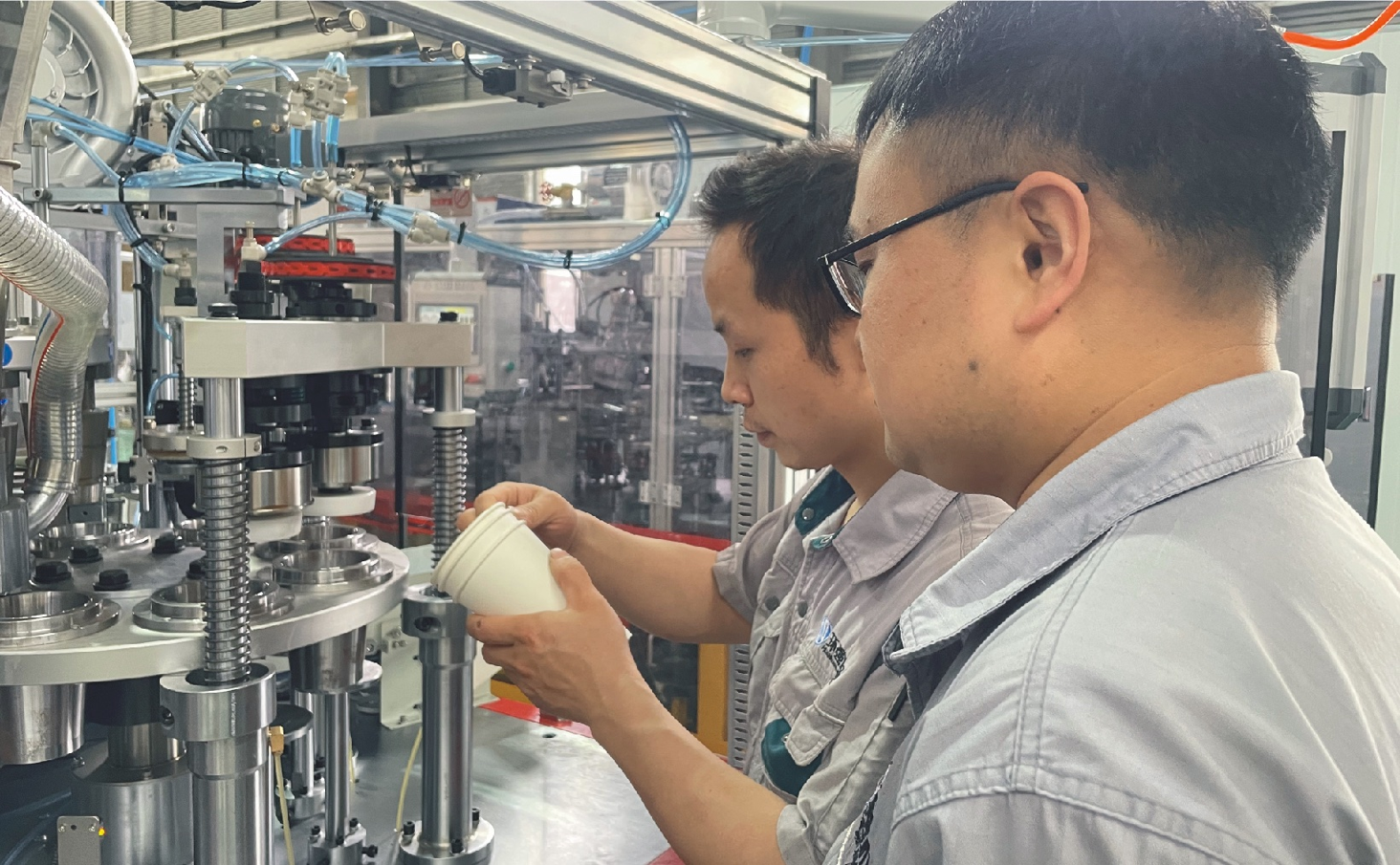
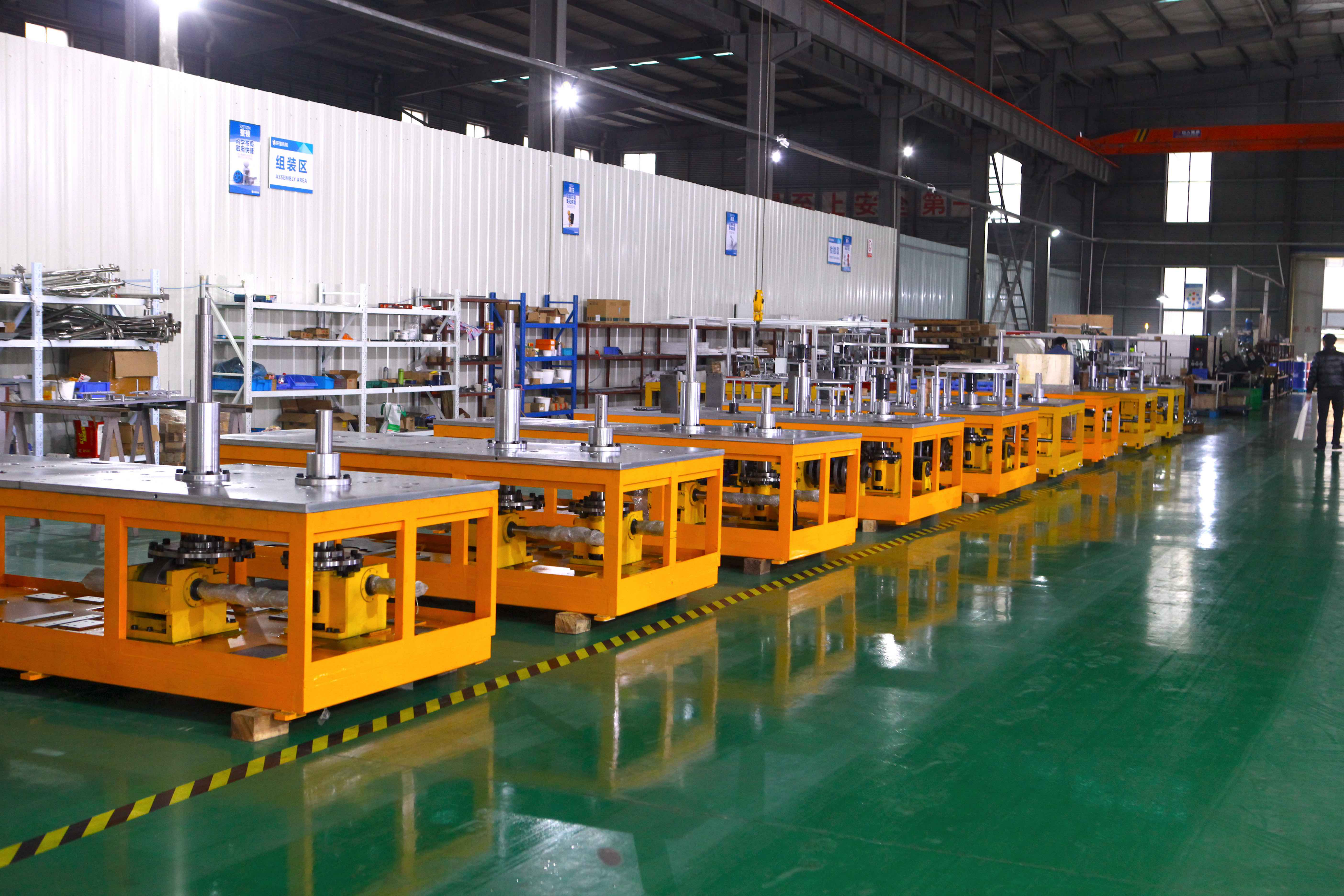
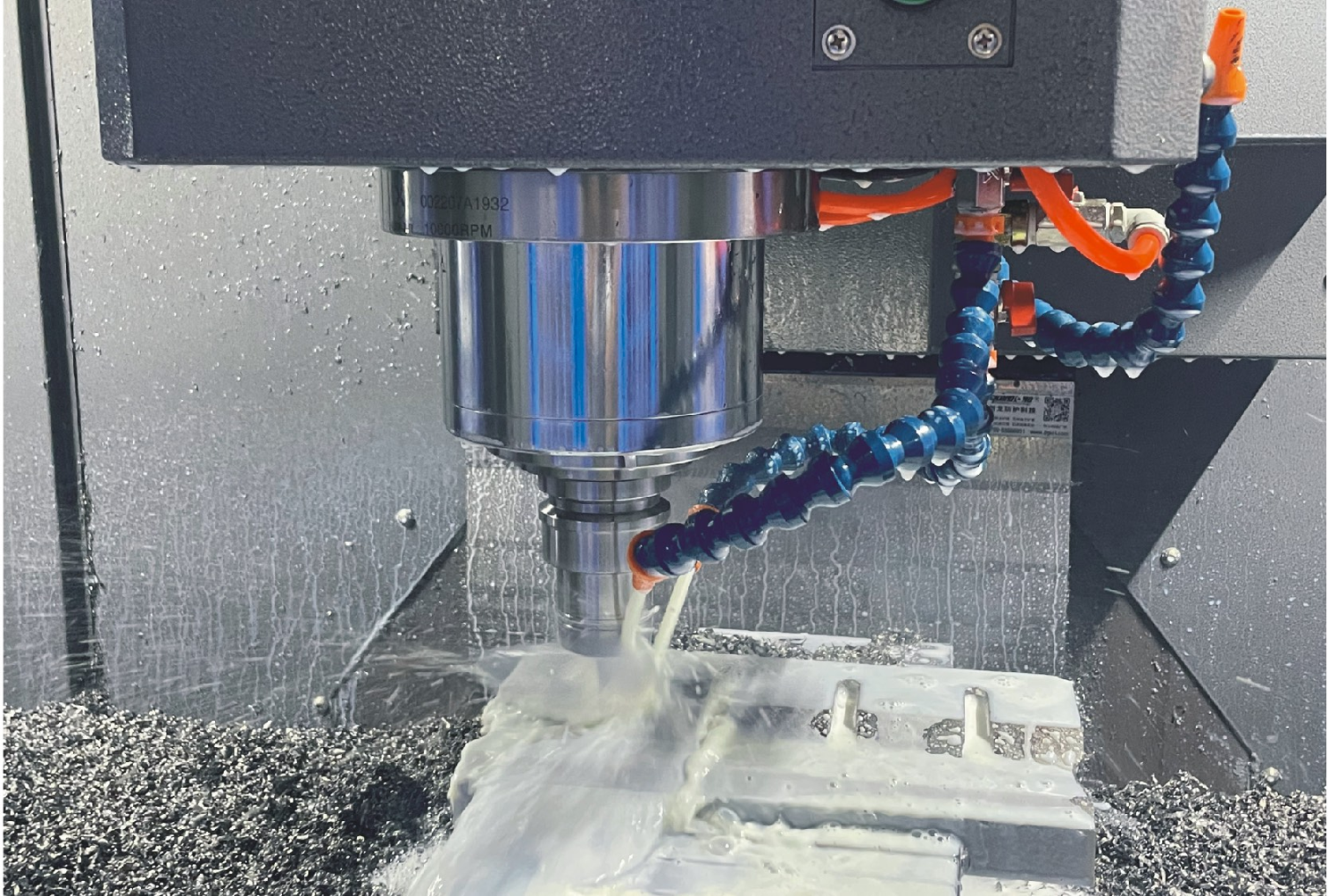

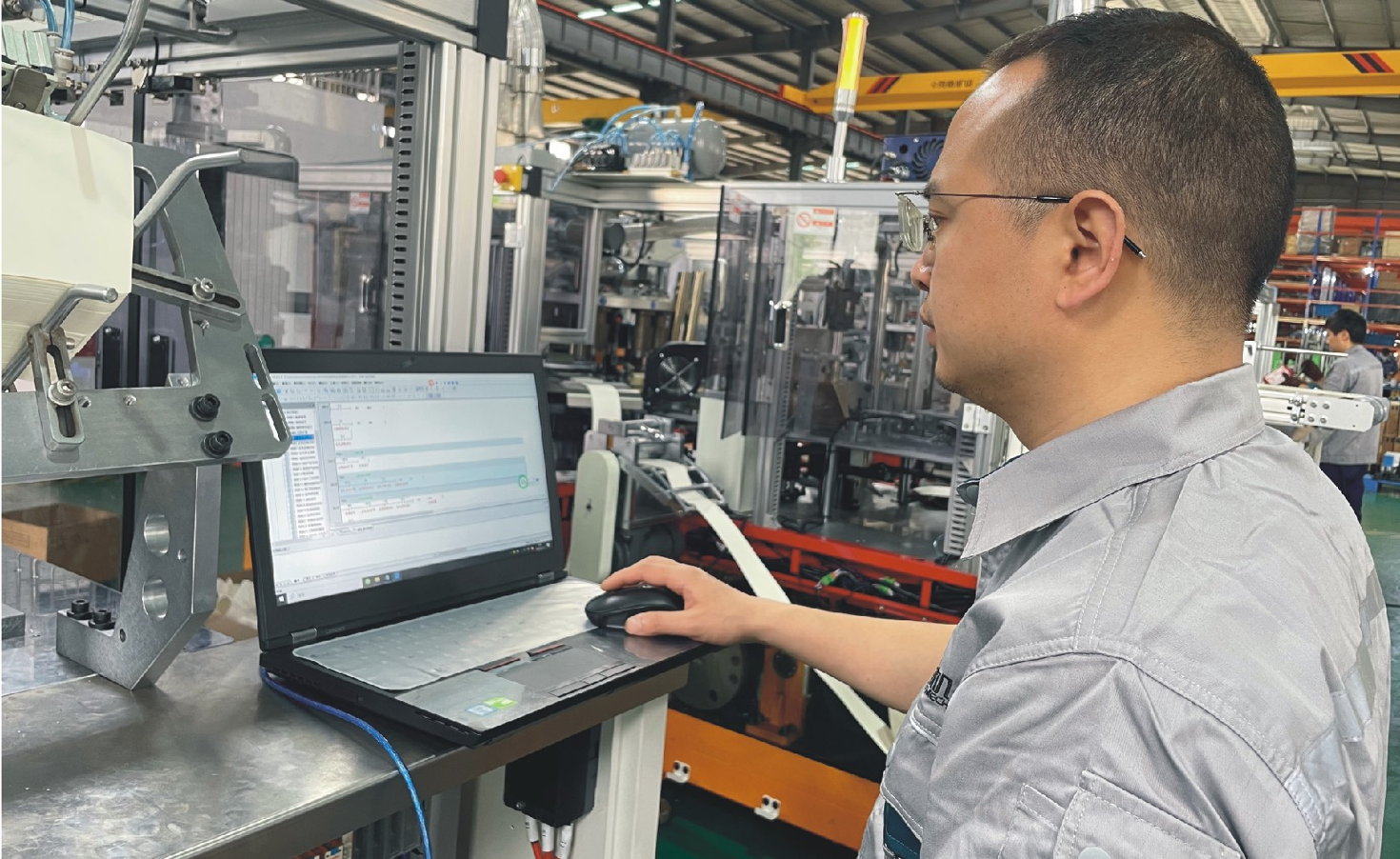
Curling quality is critical for reliable lid fit and cup rigidity. Our machines utilize a two-stage curling process. The first station applies controlled heat to soften the paper rim, and the second station rolls the rim into a tight, consistent curl. This ensures a clean finish on heavy gsm papers, multi-layered cups, and eco-coated packaging.
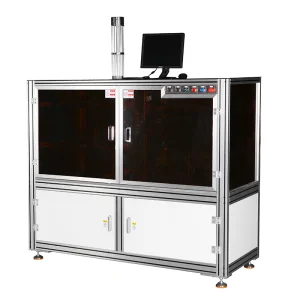
To support automated, hands-free production, we integrate our digital optical inspection system. Using high-speed industrial CCD cameras, this system scans the interior, bottom, and top rim of every cup during the production run, automatically identifying and sorting out contaminants, seam issues, or curling defects without stopping the main machine.
| Machine Model | Container Target Application | Speed Range (pcs/min) | Paper Specification Range | Total Power Requirements |
|---|---|---|---|---|
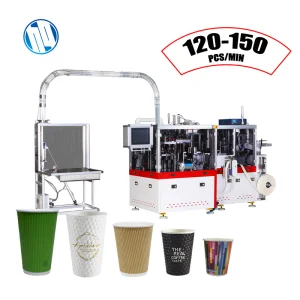
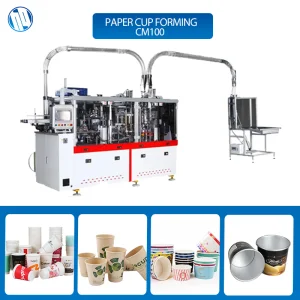
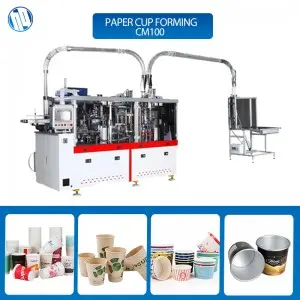
| CM100 Series | Standard Hot/Cold Beverage Cups | 90 - 120 pcs/min | 150 - 350 gsm (Single/Double PE) | 11 kW - 380V 3-Phase |
| SM100 Series | Insulated Sleeves / Double-Wall Ripple Cups | 80 - 110 pcs/min | 200 - 350 gsm (Outer Sleeve Paper) | 9.5 kW - 380V 3-Phase |
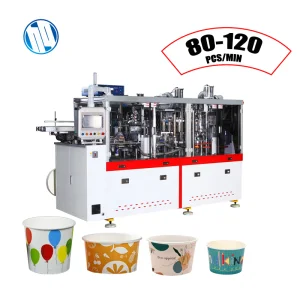
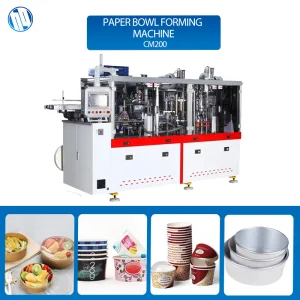
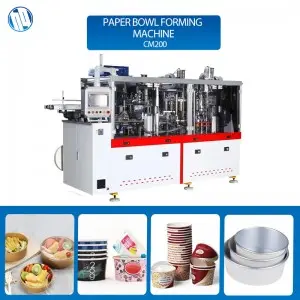
| CM200 Series | Medium Salad Bowls & Soup Containers | 80 - 100 pcs/min | 180 - 380 gsm (Heavy Packaging Kraft) | 15 kW - 380V 3-Phase |
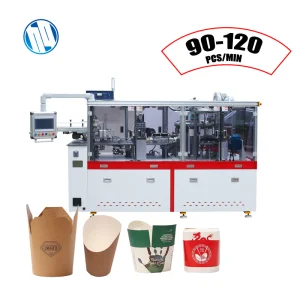
| FCM200 Series | Non-Round, Oval, and Rectangular Bowls | 70 - 90 pcs/min | 190 - 400 gsm (Coated Packaging Board) | 18 kW - 380V 3-Phase |
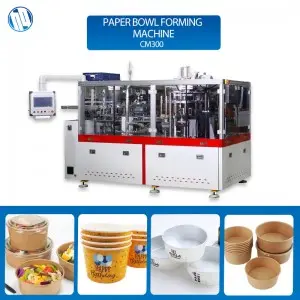
| CM300 Series | Large Jumbo Bowls & Industrial Food Buckets | 60 - 80 pcs/min | 220 - 450 gsm (Heavy Caliper Stock) | 22 kW - 380V 3-Phase |
Our complete forming lines are designed to handle demanding production requirements across several packaging categories.
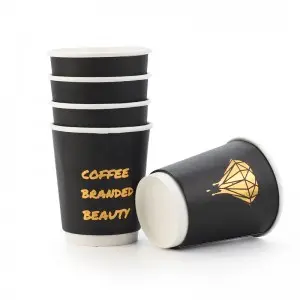
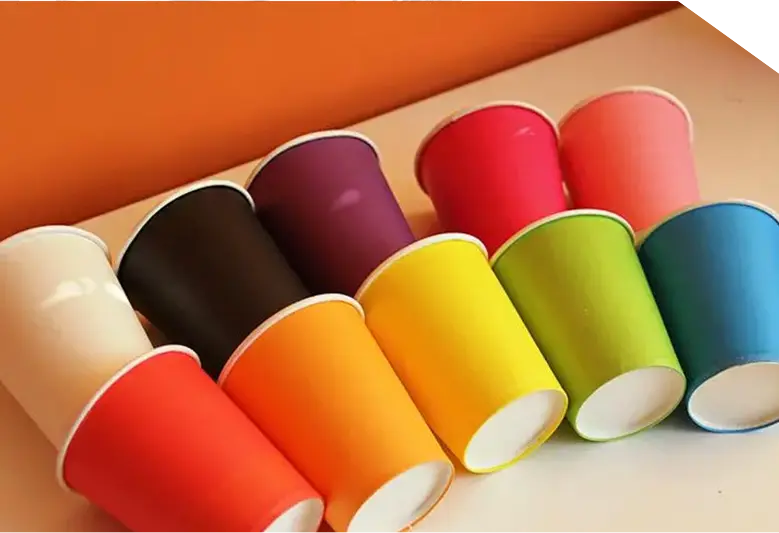
Optimized for high-speed, continuous beverage cup manufacturing. These lines process single-wall and double-wall insulated paper cups for fast-moving consumer brands, maintaining consistent rim dimensions to guarantee clean lid fits and reliable seals on automated vending equipment.
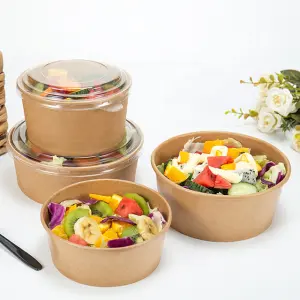
Designed to form heavy-gsm kraft and clay-coated packaging boards into leak-proof soup bowls and takeaway food containers. These lines use multi-point bottom heating and high-pressure sealing to ensure reliable performance under high temperatures and humid conditions.
Engineered for rectangular, square, oval, and multi-sided takeaway food packaging. These systems use specialized, non-circular folding and sealing kinematics to maintain structural strength along complex edges and corners.
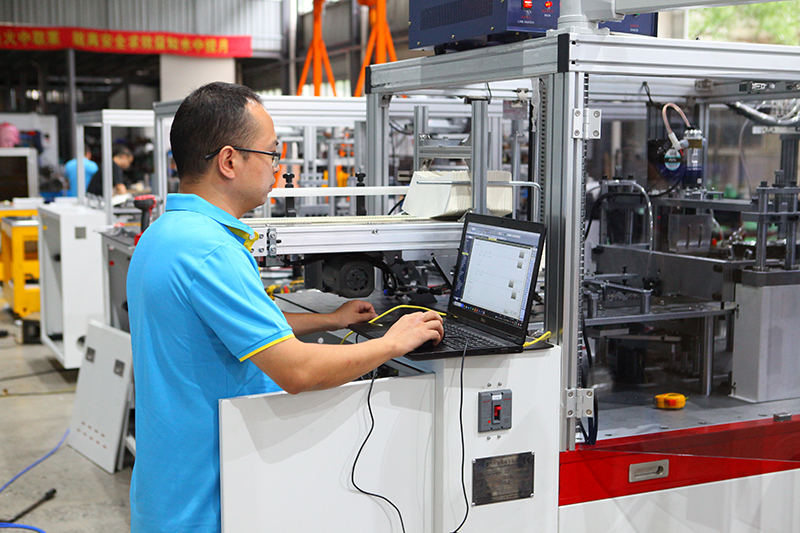
Our engineering, electrical configurations, and global support structures are built to meet international industrial standards.
All machinery configurations meet strict European CE safety regulations. Drivetrain covers feature safety interlocks, processing areas are enclosed with safety glass, and we utilize high-quality electrical components from global suppliers like Siemens, Omron, and Schneider.
Our heavy machines are prepared for long ocean shipments using vacuum-sealed barrier packaging, vapor-corrosion inhibitors (VCI), and heavy wooden crates. This process prevents moisture damage and oxidation during sea transit.
We support every sale with on-site technician deployment for installation, fine-tuning, and operator training. Our service engineers work with your local plant technicians to configure the machine for your specific paper stocks and target speeds.
Our current research focuses on high-speed bio-substrate processing, intelligent process tracking, and automated line layouts.
As the food packaging industry transitions toward circular economics, mechanical systems must adapt to process new materials. HQ Machinery's technical team is actively developing improvements to support these changes:
Answers to common technical, operational, and commercial questions from industrial buyers and packaging plant operators.
Yes, our forming platforms allow for size changes by swapping the forming molds. However, to maintain machine stability and product quality, we recommend keeping cup dimensions within a specified range on each machine. Changing molds requires recalibrating components like the bottom feed stroke, transfer arms, and curling station. Our technicians provide detailed training during commissioning to help your operators perform mold changeovers quickly.
Our high-speed machines are engineered to work with these sustainable materials. Standard PE machines rely on basic heat sealing, which can damage thin PLA or aqueous coatings. HQ Machinery combines precise multi-stage hot air heating with high-performance ultrasonic sealing transducers. This approach bonds the cup seams quickly without degrading the barrier coatings, maintaining strong seals and preventing cup leaks.
Our drivetrain uses an automatic pressure oil-bath system, which significantly reduces standard maintenance. Operators should check the oil pressure indicator daily and replace the lubricating oil after the first 1,000 running hours of initial operation. Following that, we recommend replacing the oil every 3,000 to 5,000 running hours, depending on production intensity. Regular oil changes ensure the hardened steel indexing cams run smoothly with minimal wear.
Our cup inspection system utilizes a high-resolution CCD camera mounted near the discharge station. It takes high-speed photos of the inner bottom, side seams, and top rim of every cup. The system's processing software compares these images against your configured quality parameters to detect defects like dirt, insect particles, bottom sealing gaps, or rim deformities. Defective cups are blown into a separate reject bin automatically, ensuring only quality cups reach the packaging area.
Standard mold profiles can be processed, treated, and calibrated in about 20 to 30 days. For custom container shapes, non-round geometries, or heavy embossed patterns, the engineering design and testing cycle takes about 40 to 45 days. We test all custom molds on our testing platforms before shipping to verify proper operation and fit.
Explore our specialty container systems, double-wall sleeve application systems, and industrial-grade high-volume bowl formers.
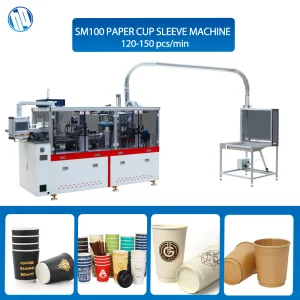
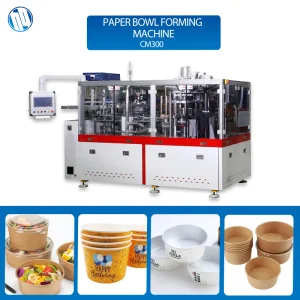
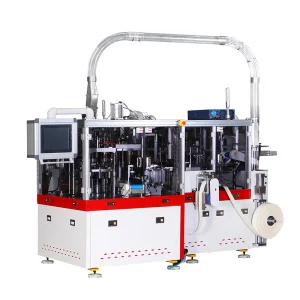

Providing custom non-standard components and tooling assemblies for heavy industrial machinery integration.
View Project Case Huan Qiang